
Fremont City Directories by Collection
Fremont was incorporated in 1956, so a city directory search must begin with the older Washington Township communities as well as the later Fremont name. The most useful shelf may be a scattered run rather than one neat set. Fremont Main has Local and California History resources, and the Washington Township Museum of Local History focuses on Centerville, Niles, Irvington, Mission San Jose, Warm Springs, and nearby community life. Ask for the exact edition and coverage before assuming a year is present.
| Collection | Years | Where Held | Access |
|---|---|---|---|
| Fremont and Washington Township city or telephone directories | Scattered late-19th and 20th century editions | Fremont Main and Washington Township Museum | Request a shelf inventory |
| Husted and Polk Alameda County or East Bay titles | Edition and community vary | Libraries, catalogs, Internet Archive, and HathiTrust | Digital or library access varies |
| U.S. census schedules | 1850-1950 public schedules | NARA, FamilySearch, and library databases | Search online or with library help |
| Alameda recorded documents | 1853-present; online index 1969-present | Alameda County Clerk-Recorder | Older index work is in person |
| Sanborn fire-insurance maps | Limited and title-dependent | Library of Congress and California map collections | Verify local coverage |
| Historic newspapers and obituaries | Title-dependent runs | Alameda County Library and newspaper databases | Library or database access |
| Mission San Jose registers and school yearbooks | Series and school year vary | Mission, archives, library, and school collections | Ask about mediated access |
The official research did not locate a complete online shelf list for every Fremont, Polk, or Husted volume. Missing years are therefore a catalog question, not proof that a directory was never printed.
Start with the Alameda County Library genealogy resources for census, obituary, newspaper, and family-history help. The local collection can point to a physical volume even when a general catalog search does not.

The library resource is a research doorway, while the shelf copy or licensed database supplies the actual Fremont city directory page to read and cite.
Five Towns Behind Fremont Names
A historical Fremont city directory may never use Fremont in its heading. Before incorporation, entries were tied to Centerville, Niles, Irvington, Mission San Jose, or Warm Springs, with Newark and broader Alameda County titles appearing nearby. Search each community name, then compare the street and surname. That single change in catalog vocabulary prevents a modern city label from hiding an older household.
| 1853 | Alameda County record books begin as a county series. |
|---|---|
| 1956 | Fremont incorporates by joining five communities; city permit retention begins at incorporation. |
| 1969 | The Clerk-Recorder electronic official-record index begins its current searchable span. |
| 2021 | Alameda civil cases move from legacy DomainWeb functions to eCourt, while probate remains in DomainWeb. |
These dates are useful anchors, not substitutes for a directory. A Niles entry may belong to a rail and film-era community, while Mission San Jose research may lead to mission, cemetery, or Spanish and Mexican naming sources. Warm Springs and newer South Fremont material can instead point toward post-incorporation permits and later subdivisions.
Fremont Library and Museum Shelves
Fremont Main’s Local and California History collection is the practical first stop for directories, telephone books, maps, newspapers, and school annuals. Library genealogy services also include Ancestry Library Edition, usually from library premises, HeritageQuest Online, census schedules, obituary resources, and reference assistance. A librarian can search by the old community name and help distinguish a directory from a telephone book or a reverse volume.
The Washington Township Museum of Local History is especially important for family files, photographs, clipping files, maps, school and community publications, and the precursor towns. Its holdings may not appear as a complete countywide shelf list. Confirm research hours, reproduction terms, and whether staff can check a surname, street, or year before making a trip.
The Online Archive of California is a finding-aid layer for Washington Township material, including collections at the Museum and Bancroft Library. A finding aid identifies a collection; it does not promise that every page is digitized. FamilySearch catalogs can add deeds, probate, naturalization, and vital-register leads, with some images available only through an account or FamilySearch Center.
Use the Museum research entry after the library search when a name belongs to Niles, Centerville, Irvington, Mission San Jose, or Warm Springs. That local vocabulary is often the difference between a direct hit and an empty city-directory result.
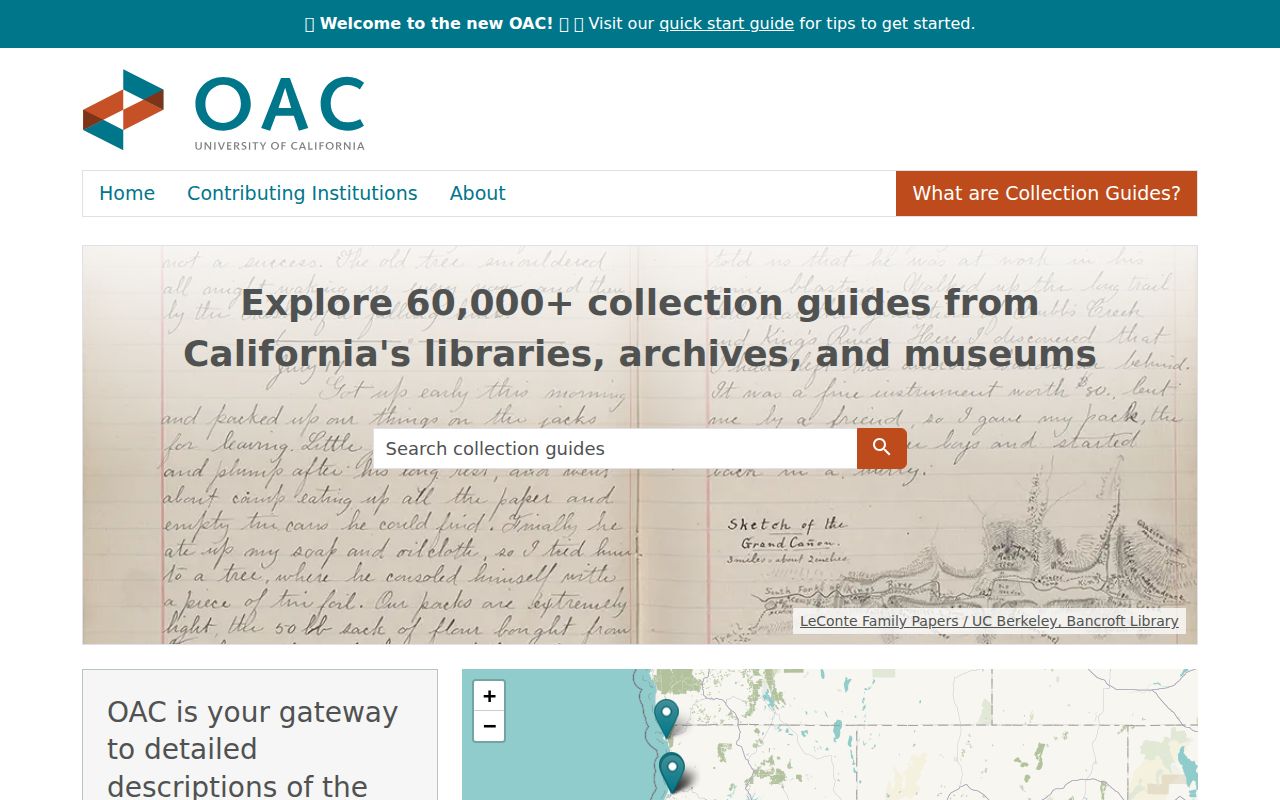
An archival catalog view helps locate a collection, but the surrounding description still needs to be checked for dates, access limits, and the exact Fremont community represented.
How a Fremont City Directory Entry Reads
A Fremont city directory entry is a compact set of clues. An alphabetical line can give a surname, given name or initial, spouse in parentheses, occupation, employer, residence, and a note such as “wid.” A reverse or criss-cross page starts with the street and house number, then lists an occupant or telephone. Business and home lines may share a volume, so the front-matter key matters.
| Name | Surname with given name or initial; spouse may follow in parentheses. |
|---|---|
| Residence | “r” commonly marks a residence; “b” can mark a boarder or boarding location. |
| Occupation | Trade or role, sometimes paired with an employer or business address. |
| Address | House number and street, with business and home lines kept separate when noted. |
| Status clue | “wid” and similar marks can identify a widow or another family change. |
| Status mark | Use an ownership or occupancy symbol only when that edition defines one; no universal Fremont mark is established. |
- Criss-cross directory
- A reverse section arranged by street and house number rather than by surname.
- Householder index
- A name list intended to point to the head of a listed household or residence.
- Abbreviation key
- The publisher’s guide that explains short forms such as r, wid, emp, or propr; photograph it before reading entries.
For a structural example, “Garcia Manuel (Elena) mach r 418 Main” can be read as a sample, not a real-person claim: Manuel Garcia, spouse Elena, machinist, residence at the listed street. Verify every abbreviation against the edition in hand.
Reverse Directories by Fremont Street
Reverse directories make a city directory useful when the starting clue is a house rather than a name. Choose an edition that covers the correct old community, then follow the street guide to the house number. A nearby entry can reveal the sequence of a block, but it remains a published listing rather than a complete resident roll.
- Confirm whether the volume labels the place as Fremont, Niles, Centerville, Irvington, Mission San Jose, or Warm Springs.
- Read the street-order section and copy the exact number, spelling, occupant, and telephone notation.
- Check the alphabetical entry for spouse, occupation, initials, and any residence abbreviation.
- Compare adjacent editions and nearby house numbers before treating a missing name as a move.
- Use a map, census schedule, or deed record to test whether an old number changed.
The Library of Congress Sanborn map collection can help with limited local coverage, especially when a street name, building footprint, or number needs historical context. Coverage is scattered, so check the title instead of assuming every Fremont block appears.
The Washington Township Museum of Local History supplies the local community context for a reverse-directory check, including the older town names that may appear in the volume.
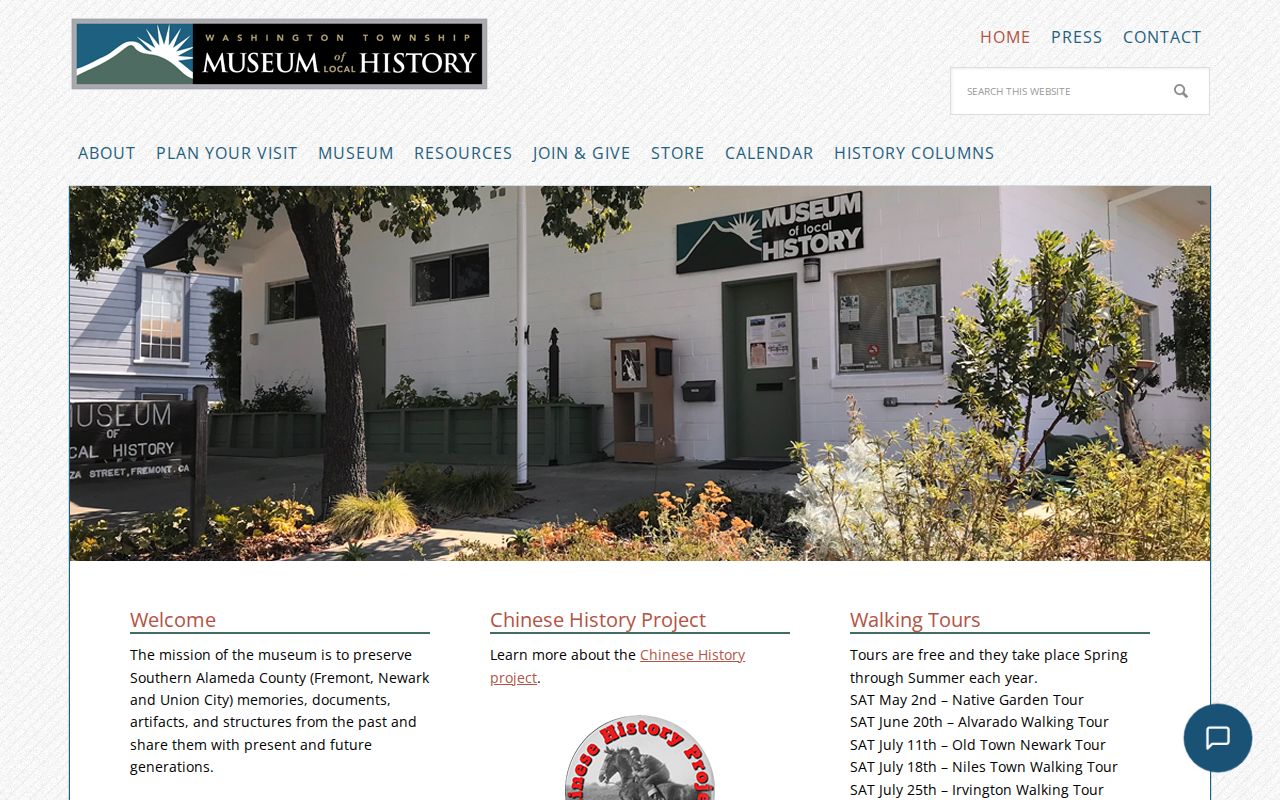
Washington Township material gives a reverse-directory search its local setting, especially for names that predate the Fremont city label.
Fremont Directory Years with Census Schedules
The 1950 census is the newest public population schedule as of 2026. It can show a street sequence, household members, relationship to the head, age, birthplace, and occupation. A city directory adds an address clue between census years, while the census can test whether a directory entry represents a household or only a business line.
Use the National Archives census guidance for the 72-year release rule. If optical character recognition misses a surname, search the enumeration district and street order instead. A census is a dated snapshot, not proof of residence for every month, so pair it with a directory, obituary, map, or recorded instrument.
Street order is especially useful in Fremont’s older communities. A household may be hard to find by name because of an initial, a spelling variant, or a language shift, while the sequence of nearby numbers still places the entry in the right part of Niles or Mission San Jose. Save the enumeration district, sheet, and line reference with the directory citation.
Fremont City Directories for Family History
Directory tracing works best when every appearance is logged. Start with the most certain name and community, then move through years without smoothing over spelling or address changes. The workflow below keeps a family-history conclusion separate from a guess.
- Find the earliest plausible entry under Fremont and each relevant predecessor town.
- Record the full line, abbreviation key, address, spouse clue, and source year.
- Check the reverse section for nearby numbers and the same surname on the block.
- Pair the directory hit with a census schedule, map, newspaper, or deed.
- Close a death or move question with an obituary, cemetery record, probate lead, or later directory.
For a modern name that needs independent confirmation, the Fremont resident lookup can connect a historical clue to current court, vital, or public-affiliation records without treating one directory line as proof.
When a Fremont Directory Entry Vanishes
A missing entry does not prove that a household moved. A compiler may have missed the canvass, a person may have used initials, a name may be misspelled, or the household may have fallen outside the delivery area. A move between the canvass date and publication can also create a false gap.
Try the old community name, alternate surname order, hyphen or compound-name variants, spouse names, reverse street pages, newspapers, Mission San Jose registers, and school annuals. Compare the address with a tract or parcel map. The strongest Fremont city directory conclusion is the one supported by more than one record family and a clear date.